The brain of the factory – inside Stegra’s first data center installation
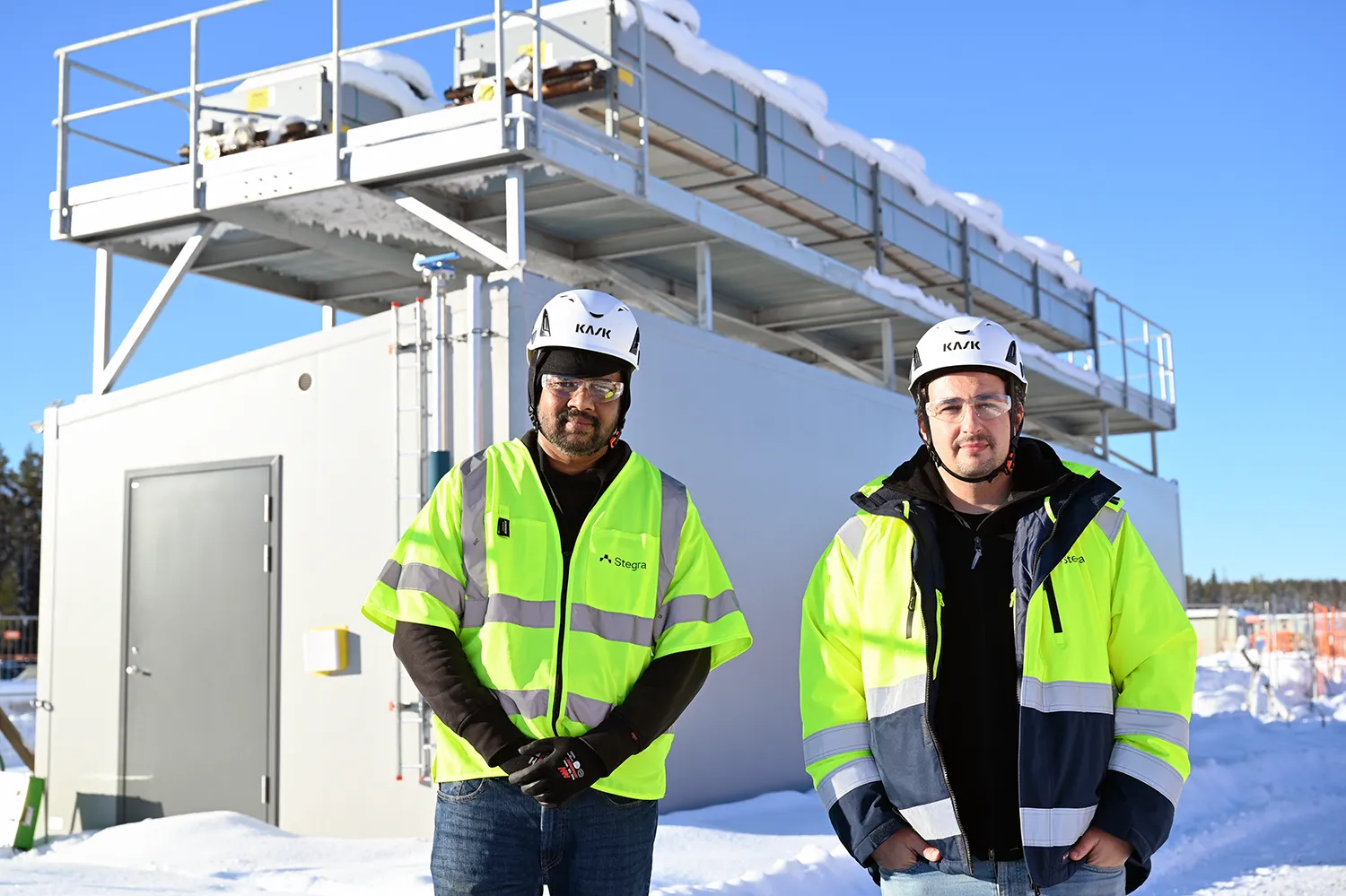
If the steel plant were a living body, you could say that until now we’ve been building its limbs and organs. Now it’s time to visit the brain.
One of several data center containers is now in place at Stegra’s site. Together, these will manage the digital systems that keep the factory running smoothly and efficiently. The first unit is currently in its final commissioning phase. Teams are connecting power and fiber, installing servers and preparing the infrastructure that will enable the plant to think, respond and operate as one intelligent system.
Focus on reliability and robustness
The data centers will support the entire site and factory, providing connectivity for all equipment, automation, control- and, communication systems.
Our focus when building this infrastructure is to make sure we have a robust, stable and reliable environment from a digital perspective so that we can focus on producing steel in a safe manner and without any downtime.
Enrique Camarottidigital domain manager
Visit Stegra’s first data center installation
A future-ready digital infrastructure
Building the factory from the ground up has given Stegra a unique opportunity to design a truly future-proof digital infrastructure. From the data centers to the network architecture and redundancy systems, every element has been planned using modern concepts and the latest technology.
“The youngest steel mill in Europe is over 50 years old. Just think about how much digitalization has evolved during that time — and how much of it has had to be integrated into legacy processes and equipment. We are designing digital elements as part of the full solution, not as an afterthought,” says Camarotti.
The data centers are designed with additional capacity for the future expansion of the factory. By focusing on scalability and long-term flexibility, Stegra is creating a digital foundation that can evolve alongside the plant.
“We have had the freedom to select solutions that are not only best suited for today’s needs, but also adaptable for tomorrow’s changes. While the lifecycle of a typical digital system may be around five years, a steel mill is built to operate for 100 years or more. That means preparing for multiple technology shifts over time,” Camarotti continues.
For us as engineers, being part of this journey from the very beginning is both a significant challenge and an exciting opportunity.
Amila Rushan Abeysinghenetwork engineer

Installation of the first data center unit, November 2025