Why 145 Meters? The reason behind a DRI tower’s height
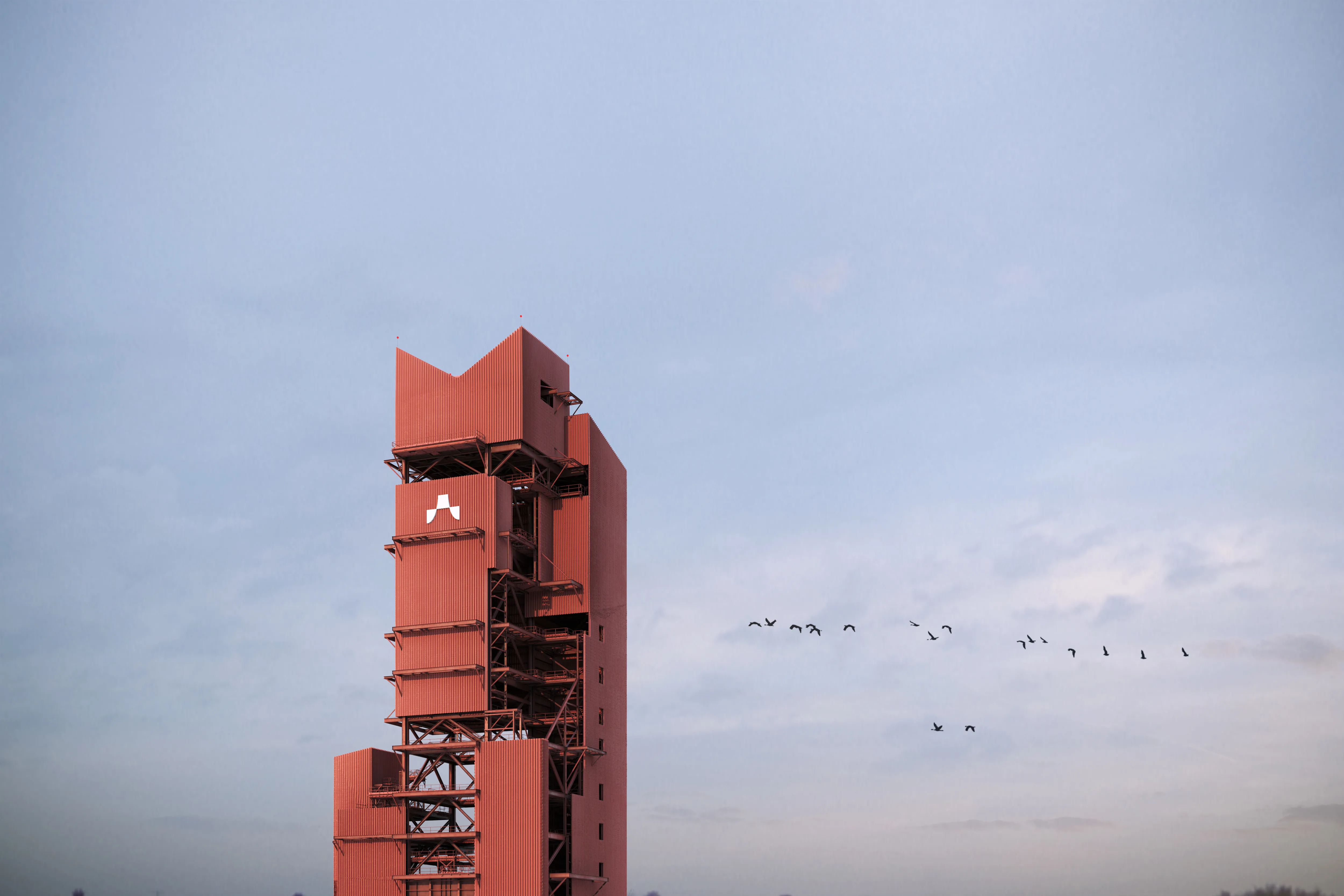
Our DRI tower has passed the 100-meter mark and will reach 145 meters when completed. But why does it need to be so tall?
In our DRI tower, we will produce green iron by reducing iron ore pellets using green hydrogen instead of coal. This is a key step that enables the production of green steel later in the process. But why does the tower need to be 145 meters tall? The answer lies in how the direct reduction process works – and what it takes to produce iron efficiently and at scale.

Stegra's DRI tower just passed the 100-meter mark.
1. Enough reaction time
Iron ore pellets need long contact time with the reducing gas to remove oxygen effectively. A tall vertical tower provides the required reaction time while still allowing high production rates.
2. Efficient gas and material flow
In a DRI tower, solids move downward while hot reducing gas flows upward. Greater height improves heat transfer and gas utilization, making the reduction process more energy efficient.
3. Well-defined process zones
The height allows the tower to be divided into zones for preheating, reduction, and final metallization. This leads to stable operation and uniform DRI quality.
4. High capacity without excessive diameter
Increasing height is more effective than increasing diameter. Wide towers suffer from poor gas distribution, while tall towers maintain good flow control and high throughput.
5. Controlled gas flow and pressure drop
A certain pressure drop is required to ensure even gas distribution through the pellet bed. Tower height helps achieve this without extreme gas compression.
In summary:
DRI towers are tall to ensure efficient chemical reduction, good energy efficiency, stable process control, and high productivity, which is especially important for hydrogen-based DRI plants.